Procurement is not merely issuing purchase requests or comparing quotations. It is a broad profession that combines commercial understanding, technical knowledge, contract management, data analysis, supplier relationships, and the creation of sustainable value for the organization.
When many people hear the word procurement, they think of requesting quotations, negotiating prices, issuing purchase orders, and dealing with suppliers day to day. Modern procurement is much wider. It includes strategic sourcing, category management, contracts and tenders, supplier management, technical procurement, analytics and digitalization, sustainability, local content, and commercial governance.
“Which procurement path fits my background and skills, and what knowledge, experience, and professional development do I need to succeed in it?”
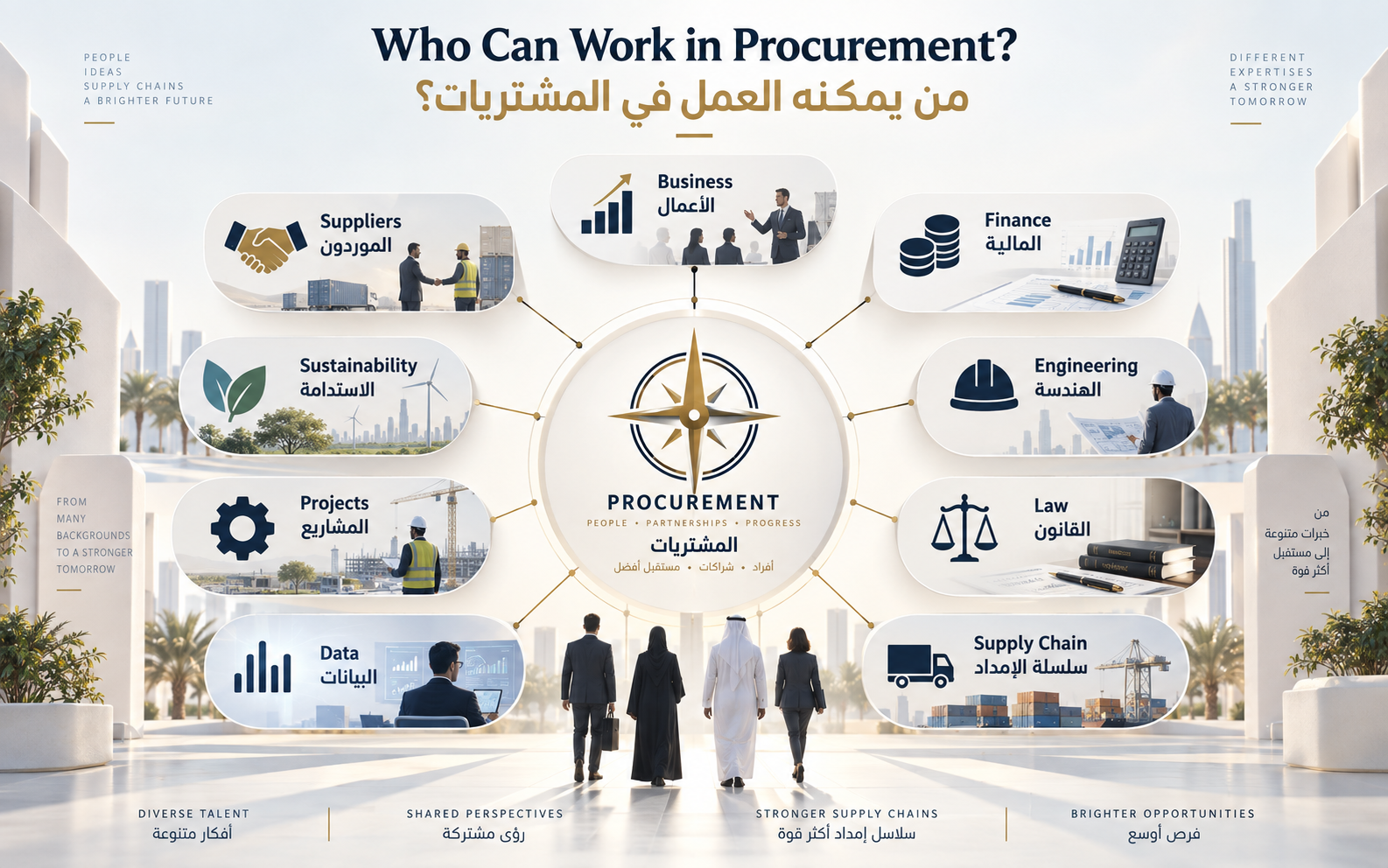
Procurement Is a Multidisciplinary Profession
A person can begin a procurement career from different backgrounds, including:
- Business administration
- Finance and accounting
- Engineering and technical disciplines
- Law and commercial management
- Supply chain and operations
- Data analysis and information technology
- Projects and construction
- Sustainability and environmental work
- Supplier relationship management and development
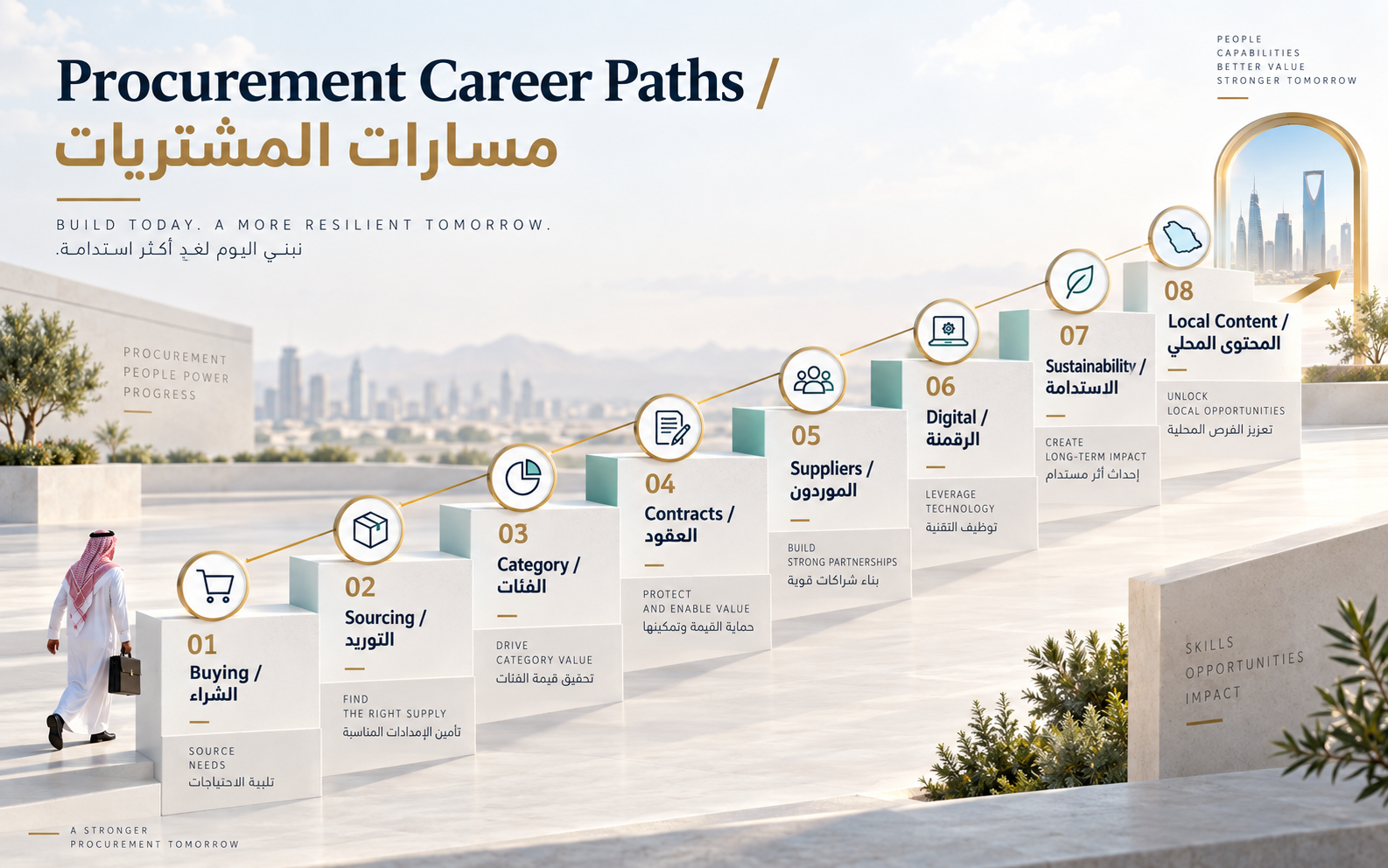
Key Career Paths in Procurement
| Career path | Focus |
|---|---|
| Operational procurement | Buyer, procurement officer, and purchasing specialist roles focused on requests, comparisons, purchase orders, and supply follow-up. |
| Strategic sourcing | Understanding markets, analyzing suppliers, defining sourcing strategies, and negotiating for the best value. |
| Category management | Managing each spend category as a commercial portfolio covering spend volume, markets, cost drivers, risks, and improvement opportunities. |
| Engineering and technical procurement | Connecting technical requirements with commercial and contractual impact in construction, energy, utilities, and manufacturing. |
| Tendering and contracts | Preparing RFP documents, managing tender processes, contractual terms, negotiations, and claims with strong governance. |
| Supplier and commercial relationship management | Managing supplier performance, KPIs, risk, improvement plans, and supplier development for long-term partnerships. |
| Analytics and digital procurement | Using spend analysis, dashboards, ERP systems, e-procurement, automation, and artificial intelligence. |
| Sustainability and local content | Broadening procurement to include environmental impact, ESG assessment, circular purchasing, SME development, and local-content objectives. |
What Skills Does a Procurement Professional Need?
Important skills include commercial understanding, analytical thinking, contractual knowledge, communication and influence, stakeholder management, digital capability, ethics, and governance.
Do You Need a Professional Qualification?
Professional qualifications are important, but they are not a substitute for experience or practical understanding. Credentials from organizations such as CIPS, ISM, or IPSCMI can be useful depending on the role, sector, and employer requirements. The key idea is to choose professional development that serves your path.
“Procurement is not just buying. It is a profession that creates value, protects the business, builds partnerships, and influences long-term organizational success.”
SANAD Consultancy Services (FZE) Support · Guide · Achieve