In procurement, the lowest price can be attractive. It is visible, easy to compare, and easy to explain. But the purchase price tells us only what we pay today. It does not necessarily tell us what the organization will ultimately spend.
Total Cost of Ownership changes the conversation. TCO looks beyond the initial purchase price and considers the costs associated with acquiring, operating, maintaining, supporting, replacing, and eventually disposing of a product, service, or asset.
“Price is what you pay to buy it. TCO is what it costs you to own it.”
1. The Iceberg Effect
Purchase price is like the visible tip of an iceberg. It is the part everyone sees. Beneath the surface may sit costs that are much larger over the life of the purchase.
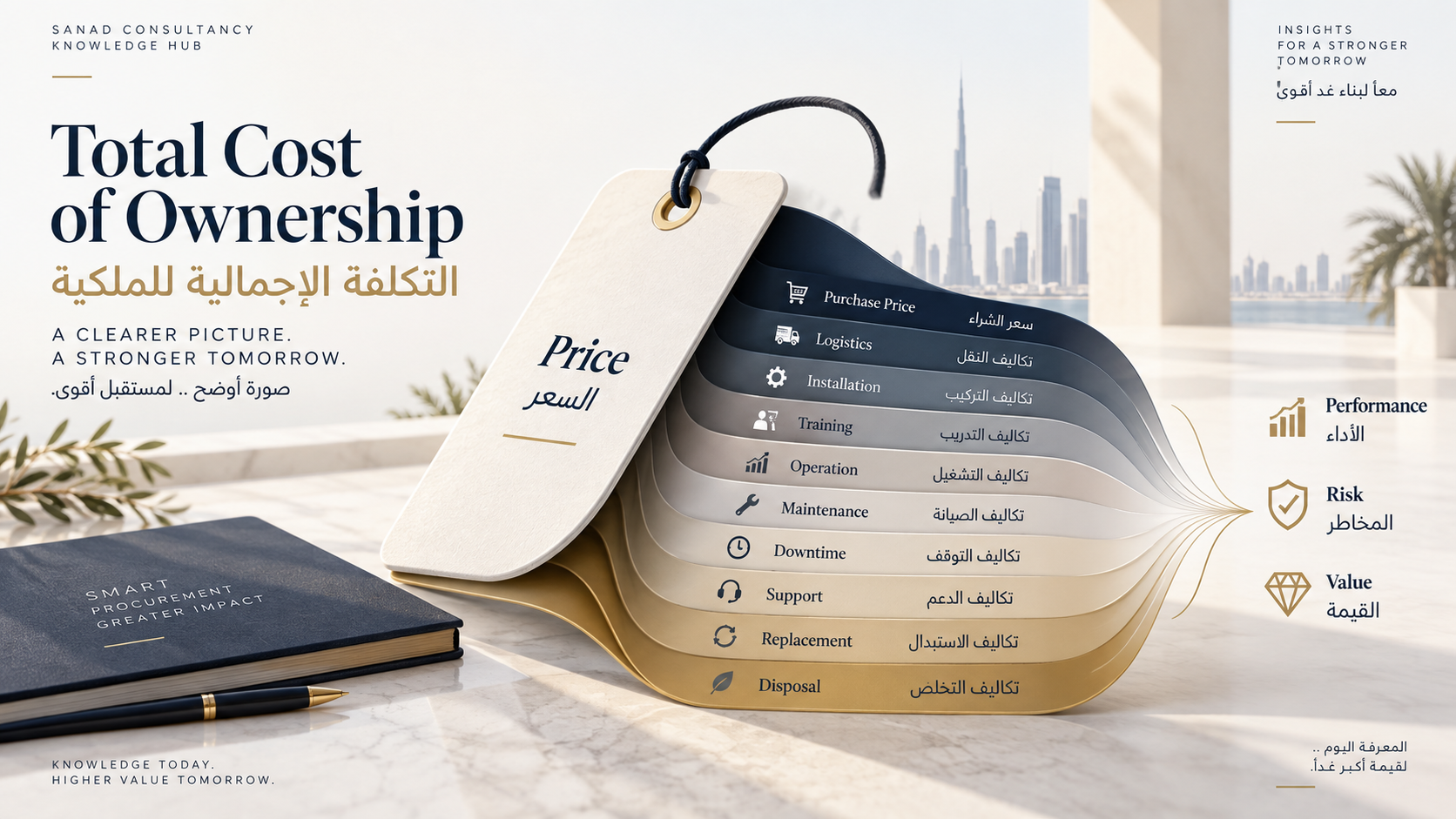
- Transportation, logistics, installation, and implementation.
- Training, adoption support, and internal administration.
- Operating cost, energy consumption, maintenance, and spare parts.
- Downtime, reliability issues, supplier support, and quality failures.
- Risk exposure, replacement cost, disposal, and end-of-life obligations.
- Internal resources required to manage the solution after award.
2. A Simple Procurement Example
Consider two suppliers competing for the same requirement. Supplier A offers a purchase price of AED 100,000. Supplier B offers AED 115,000. Looking only at price, Supplier A appears to be the obvious choice.
| Cost Component | Supplier A vs Supplier B |
|---|---|
| Purchase Price | AED 100,000 vs AED 115,000 |
| Maintenance | AED 40,000 vs AED 20,000 |
| Energy / Operating Cost | AED 30,000 vs AED 20,000 |
| Downtime / Reliability Cost | AED 25,000 vs AED 10,000 |
| End-of-Life Cost | AED 5,000 vs AED 5,000 |
| 5-Year TCO | AED 200,000 vs AED 170,000 |
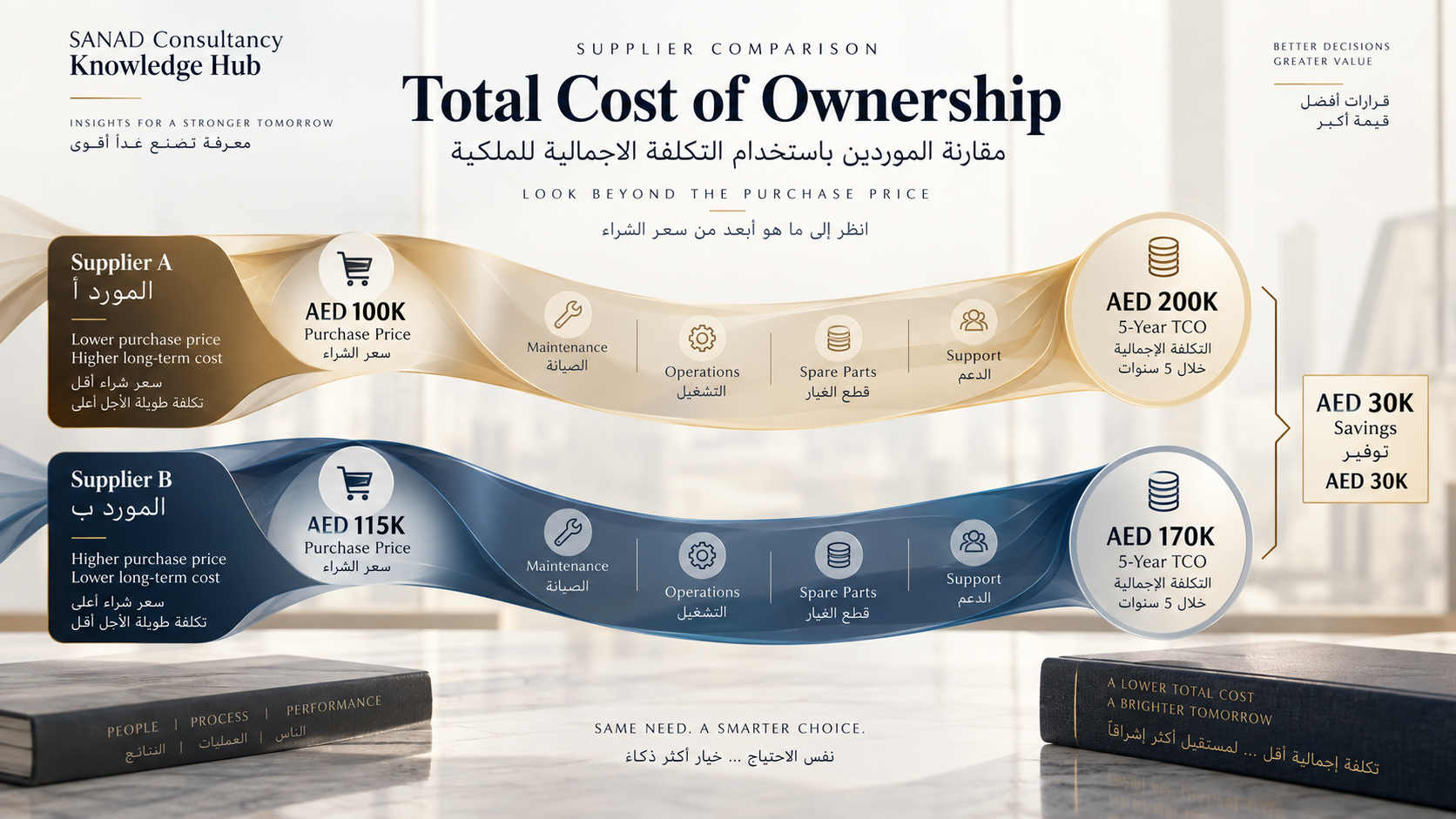
The lowest-priced supplier was therefore not the lowest-cost supplier. This does not mean procurement should automatically choose the more expensive option. It means procurement should understand the full economic impact of the decision.
3. Moving From Price to Value
- What will this cost us to operate, maintain, and support?
- What happens if it fails or creates downtime?
- How reliable is the supplier, and what support is included?
- What logistics, training, and internal resources are required?
- What risks are we accepting, and who owns them?
- What happens at the end of the useful life?
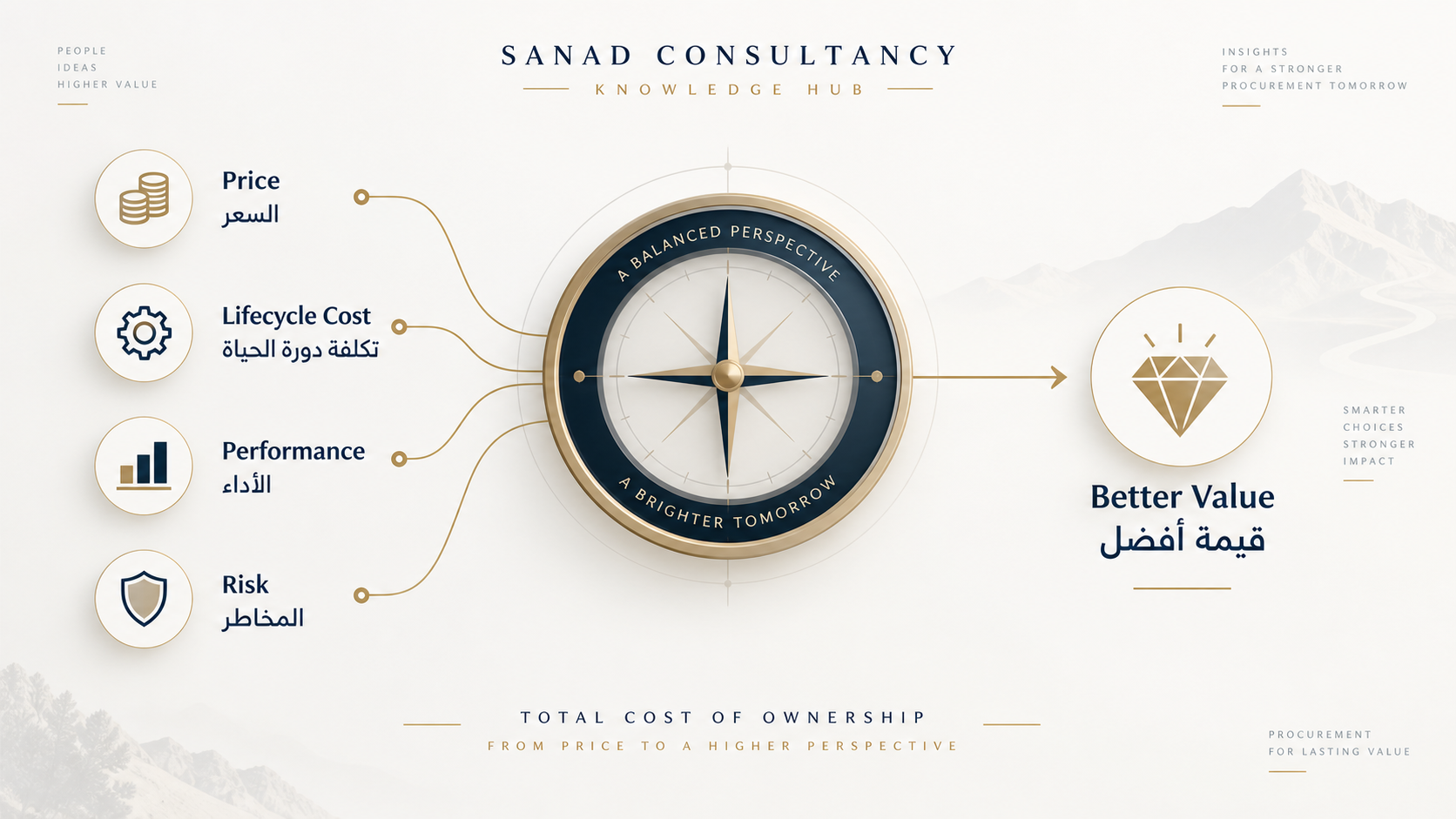
These questions shift procurement from a simple price comparison into a value-based commercial decision. Price remains important, but it is no longer the only measure of value.
4. Not Every Purchase Needs a Complex TCO Model
TCO should be proportionate. A detailed model may make sense for major equipment, fleet, technology platforms, long-term services, or strategic contracts. It may not make sense for every routine purchase.
Procurement teams should apply TCO where lifecycle costs, operational consequences, or risks are significant enough to influence the sourcing decision. The objective is not to make procurement more complicated. The objective is to make the decision better.
SANAD Consultancy Services (FZE) Support · Guide · Achieve