
A vendor may introduce a new technology, an internal team may propose an innovative solution, or an AI-enabled platform may promise productivity gains or cost reduction. Instead of committing to a full project, the organization decides to run a Proof of Concept.
“The real question is not only whether the PoC worked. It is what the PoC proved, who received value from it, and whether it produced enough evidence to support a better investment decision.”
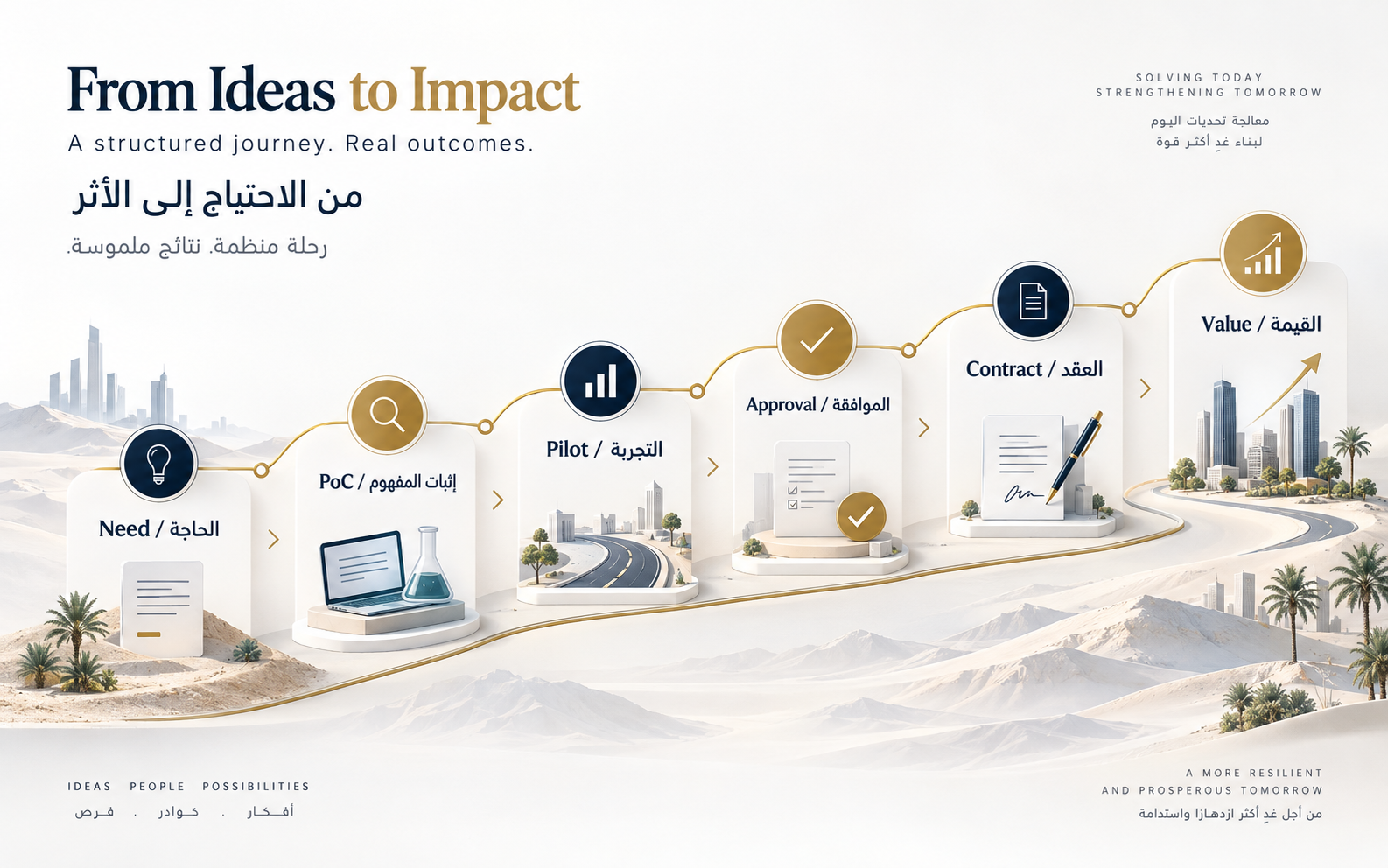
1. What Is a Proof of Concept?
A PoC is a limited, focused test designed to validate a specific hypothesis or capability before committing to wider investment or implementation. A good PoC starts with a clear question, not with a product a vendor wants to demonstrate.
2. PoC, Prototype, or Pilot?
| Stage | Purpose |
|---|---|
| Proof of Concept | Tests whether an idea, technology, or capability can work. |
| Prototype | Shows how the solution may look or behave in a simplified form. |
| Pilot | Tests the solution in a more realistic operational environment. |
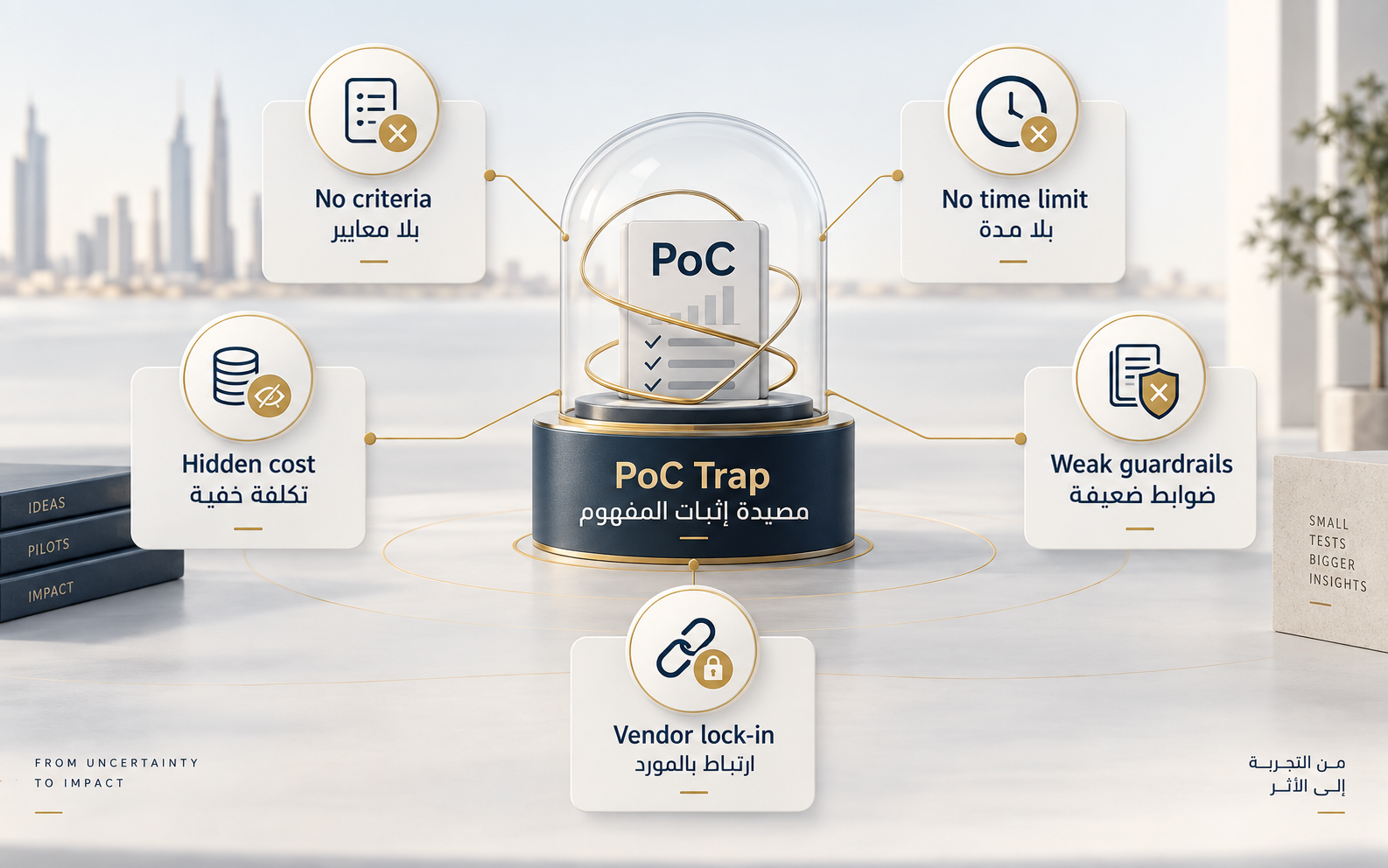
3. When a PoC Becomes a Trap
A PoC becomes risky when it has no defined success criteria, no time limit, unclear ownership of data and outputs, hidden implementation costs, weak procurement guardrails, or an assumption that success automatically means purchase approval.
“Sometimes the best outcome of a PoC is the decision not to buy.”
4. A PoC Is Part of the Decision Journey
| Decision Point | Governance Question |
|---|---|
| Need | What business problem are we trying to solve? |
| PoC | Can the core assumption work? |
| Pilot | Can it work in real operations? |
| Procurement approval | Is the solution commercially, technically, and operationally justified? |
| Contract award | Are obligations, risks, and success measures clear? |
| Final acceptance | Did the delivered solution meet the agreed outcomes? |
5. Designing a Good PoC
- The business problem and hypothesis being tested.
- Success criteria and evidence required for the next decision.
- Time, cost, data, integration, security, and ownership boundaries.
- Procurement guardrails and whether PoC success creates any vendor advantage.
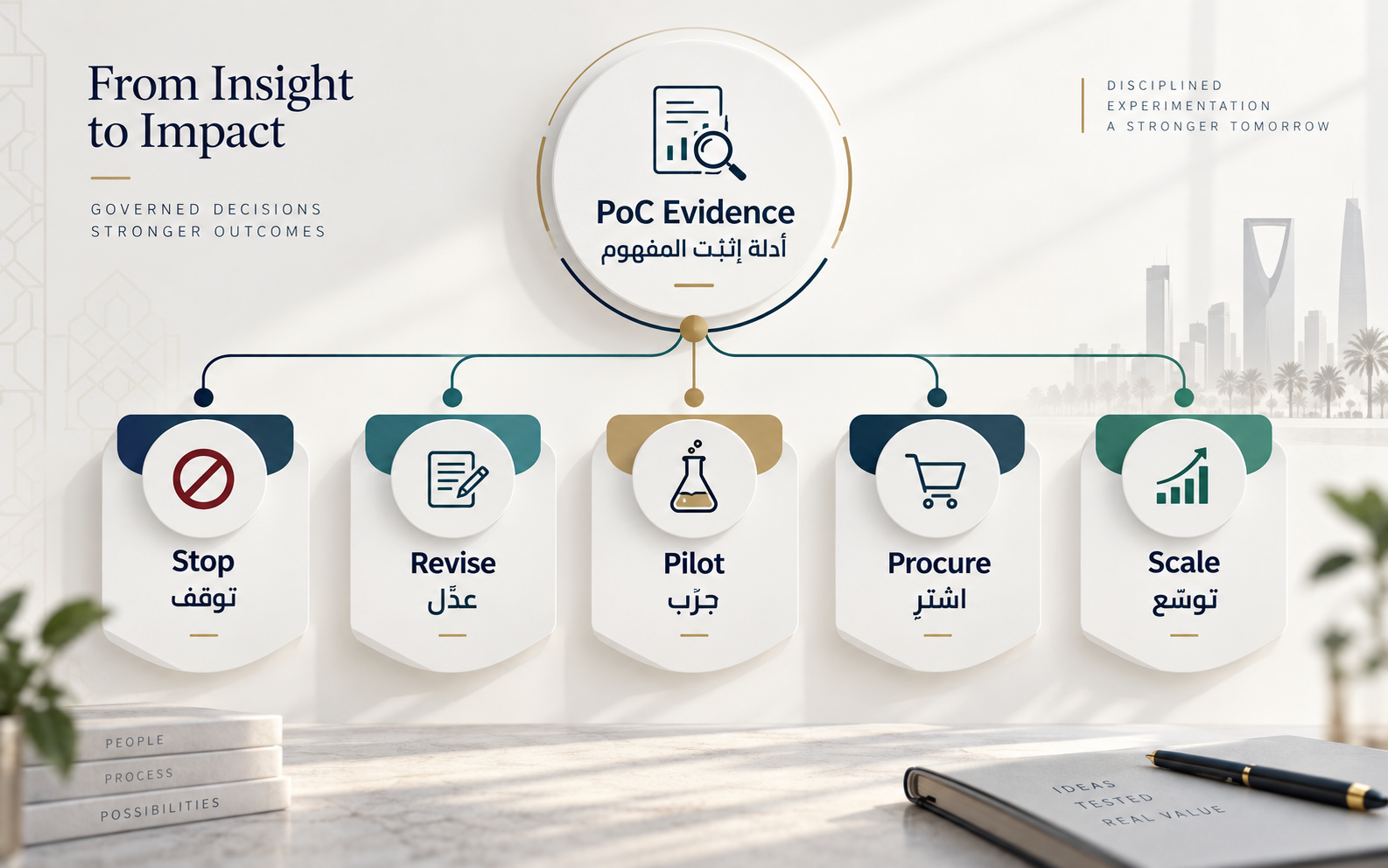
- The exit decision: stop, revise, pilot, procure, or scale.
6. Procurement’s Role
Procurement should not enter only after the technical team has already committed emotionally or operationally to one vendor. It should help define commercial boundaries, data and IP treatment, evaluation criteria, supplier responsibilities, and the decision path before the PoC begins.
“A vendor’s successful PoC does not automatically mean the vendor should receive the full contract.”
7. What Happens After the PoC?
At the end of the PoC, the organization should make a clear decision: stop, redesign, compare alternatives, proceed to pilot, or begin a structured procurement process. Continuing without a decision creates hidden cost and weakens governance.
The purpose of a PoC is not to prove that a vendor can run a successful demonstration. It is to reduce uncertainty before a larger decision.
SANAD Consultancy Services (FZE) Support · Guide · Achieve