Procurement is often treated as if it starts when an RFQ or RFP is issued and ends when a purchase order or contract is awarded. That view is too narrow. It misses the decisions that shape value before the market is approached, and it misses the performance discipline required after the contract is signed.
“Effective procurement does not start with the tender and does not end with the purchase order.”
A better way to view procurement is as an end-to-end lifecycle. It begins with understanding the business need, continues through sourcing strategy, supplier selection, negotiation, execution, and supplier performance management, and then feeds lessons learned back into the next need.
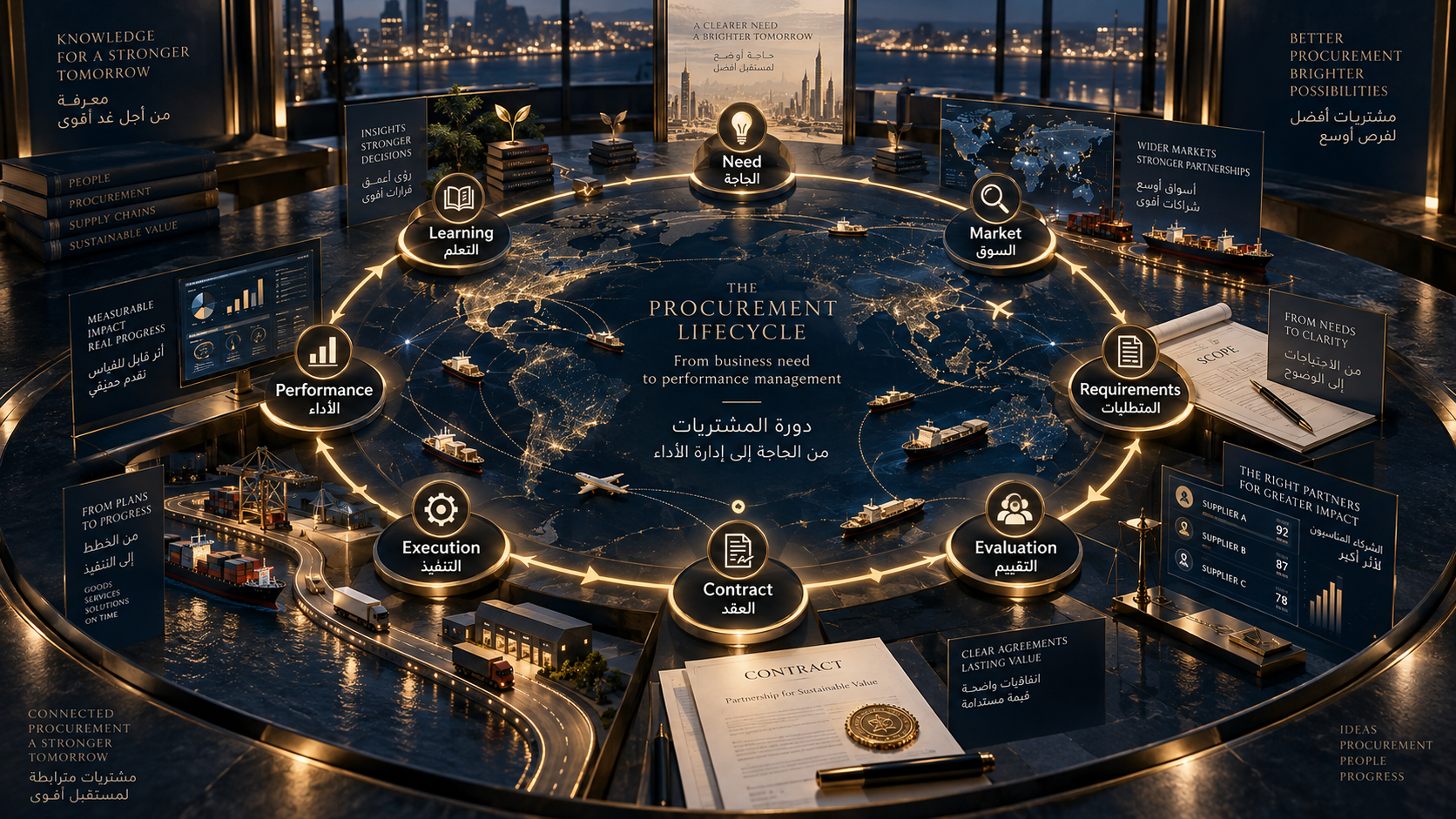
1. Need Identification and Planning
A good procurement outcome starts with a well-defined need. Before approaching suppliers, the organization should understand the actual business requirement, scope, quantities, specifications, budget, timeline, and stakeholder expectations.
This is also the stage where procurement can add early value by challenging unnecessary requirements, identifying consolidation opportunities, checking demand forecasts, and clarifying whether the requirement is urgent, recurring, strategic, or routine.
“A weak definition of need usually produces a weak supplier comparison.”
2. Market Analysis and Sourcing Strategy
Procurement should not simply ask the same suppliers for quotations every time. It should understand the market before deciding how to approach it. This includes supplier landscape, competition, market capacity, price trends, supply risks, and local, regional, or global sourcing options.

3. Requirements and Solicitation
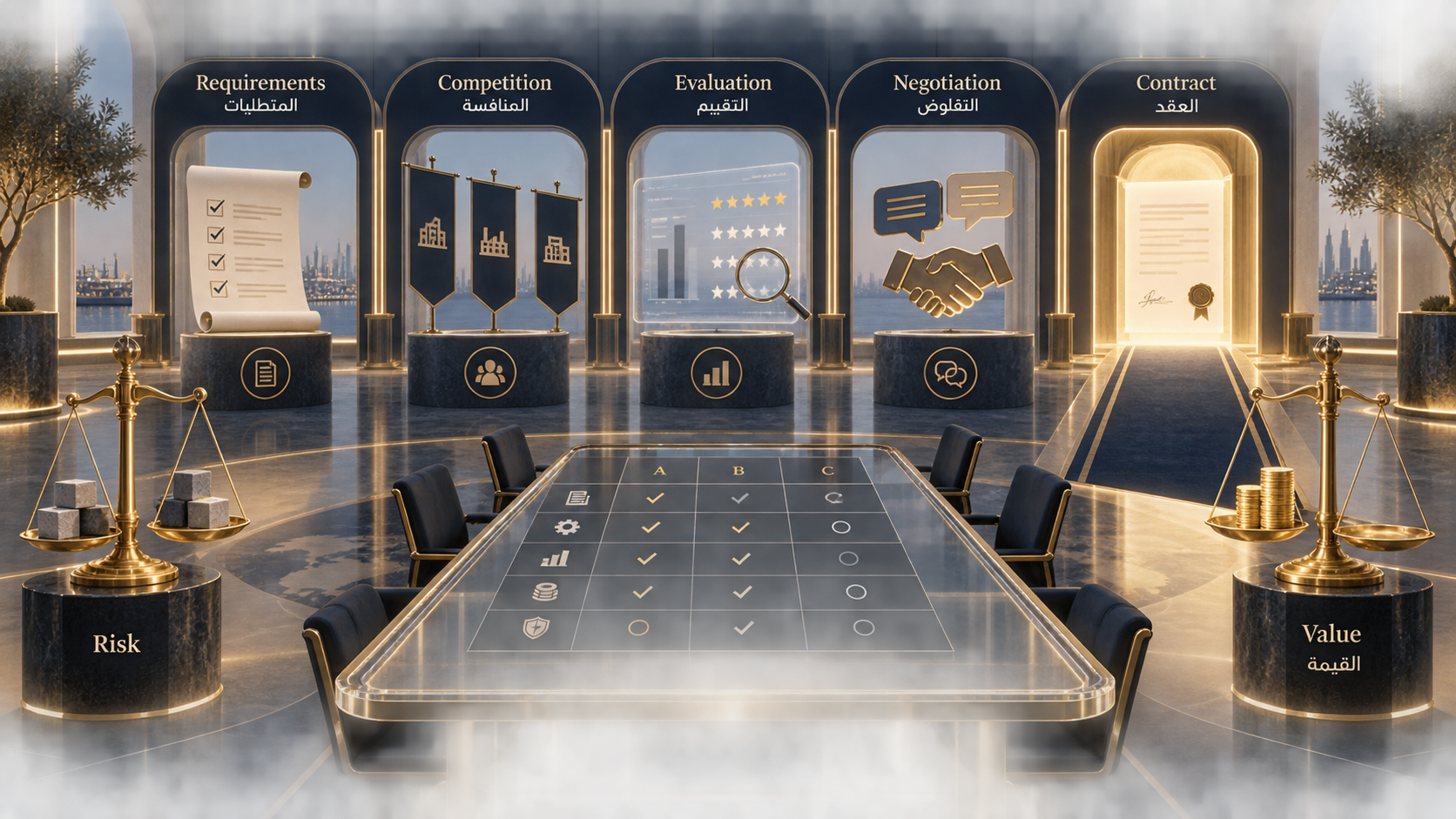
Once the sourcing approach is clear, the requirements must be translated into documents suppliers can respond to properly: scope of work, technical requirements, commercial terms, delivery expectations, service levels, evaluation methodology, and contractual expectations.
| Document | When it is useful |
|---|---|
| RFI | Request for Information helps understand supplier capability, market options, or available solutions before fixing the requirement. |
| RFQ | Request for Quotation is useful when the requirement is clear and the main comparison is commercial. |
| RFP | Request for Proposal is useful when the organization needs suppliers to propose an approach, methodology, solution, or value model. |
4. Supplier Evaluation and Selection
Supplier evaluation should look beyond price. The lowest price does not necessarily mean best value. Depending on the category, evaluation may include technical capability, quality, experience, financial stability, delivery capacity, risk, service support, sustainability, compliance, and long-term capability.
This is where Total Cost of Ownership becomes useful. A supplier may appear cheaper at award but cost more through maintenance, downtime, energy, support, replacement, or risk exposure. Evaluation should connect price with performance and lifecycle impact.
5. Negotiation and Contracting
Negotiation is broader than reducing price. It should clarify commercial terms, payment terms, service levels, delivery commitments, warranty, KPIs, change management, responsibilities, risk allocation, and contract governance.
6. Purchase Order, Execution, and Delivery
Issuing the purchase order is not the end of procurement. It activates the commercial commitment, but the value is only realized through supplier mobilization, delivery, inspection, acceptance, invoice matching, payment, and contract compliance.
“Order, delivery, acceptance, and payment are operational controls, not administrative afterthoughts.”
7. Supplier Performance Management and Closure
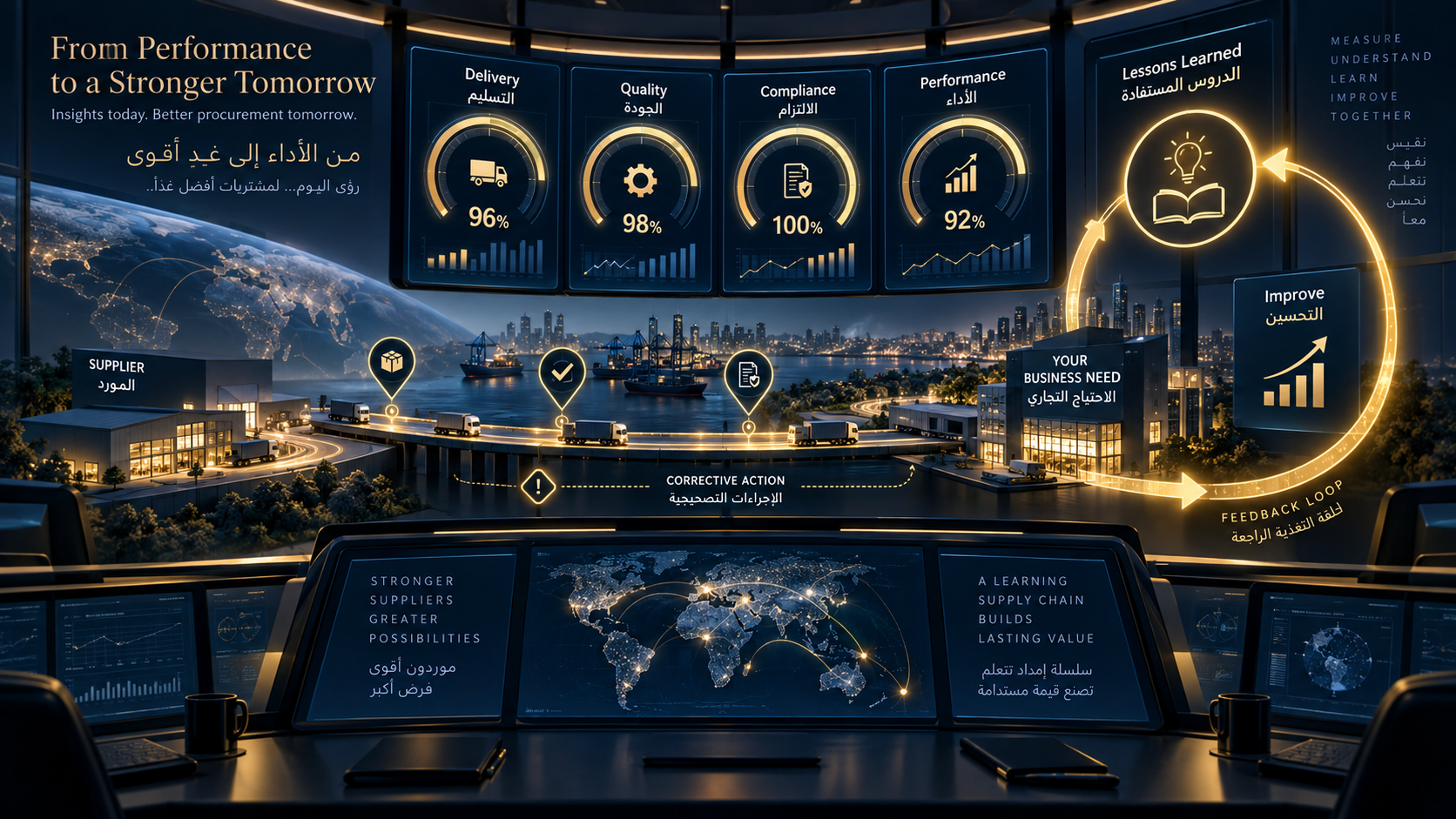
The lifecycle continues after delivery. Supplier performance should be measured through relevant KPIs such as quality, delivery performance, responsiveness, commercial performance, contract compliance, sustainability where applicable, corrective actions, and supplier development.
Closure is also important. Lessons learned, performance records, contract closeout, and improvement actions should inform future procurement decisions. Without this feedback loop, every new procurement starts from memory rather than evidence.
Procurement as a Continuous Cycle
Poor decisions early in the lifecycle create problems later: unclear need, weak specification, poor supplier comparison, contract issues, and performance problems. A well-managed lifecycle creates the opposite: clearer demand, better market strategy, stronger evaluation, more effective contracts, controlled execution, measured performance, and continuous improvement.
“Smarter procurement today creates greater value tomorrow.”
SANAD Consultancy Services (FZE) Support · Guide · Achieve