Sustainable procurement is not a slogan, a green logo, or a preference for environmentally friendly products. It is a disciplined way of making purchasing decisions so that cost, quality, continuity, risk, governance, environmental impact, social responsibility, and long-term value are considered together.
For procurement and supply chain teams, the practical question is simple: how do we move sustainability from policy language into specifications, supplier selection, contracts, storage, reporting, and measurable outcomes?
“Sustainable procurement begins when the purchasing decision is treated as a value decision, not only a price decision.”
1. Why Sustainable Procurement Matters
Traditional procurement often focuses on price comparison, delivery time, and basic compliance. Those remain important, but they are no longer enough. A low-cost option can create hidden cost through poor quality, high energy use, short service life, supplier failure, weak documentation, reputational risk, waste, or non-compliance.
Sustainable procurement helps organizations reduce risk, protect reputation, support innovation, strengthen supplier performance, and create value over the full lifecycle of what they buy.
2. Start Early: Sustainability Begins Before the Purchase
The best sustainability decisions happen before the request for quotation is issued. During planning, the organization can challenge the need, define the outcome, choose the right specification, and decide which sustainability criteria genuinely matter for the category.
Early questions include whether the item is needed, whether an existing asset can be reused, whether the specification is over-designed, which environmental or social risks apply, and what evidence suppliers should provide.
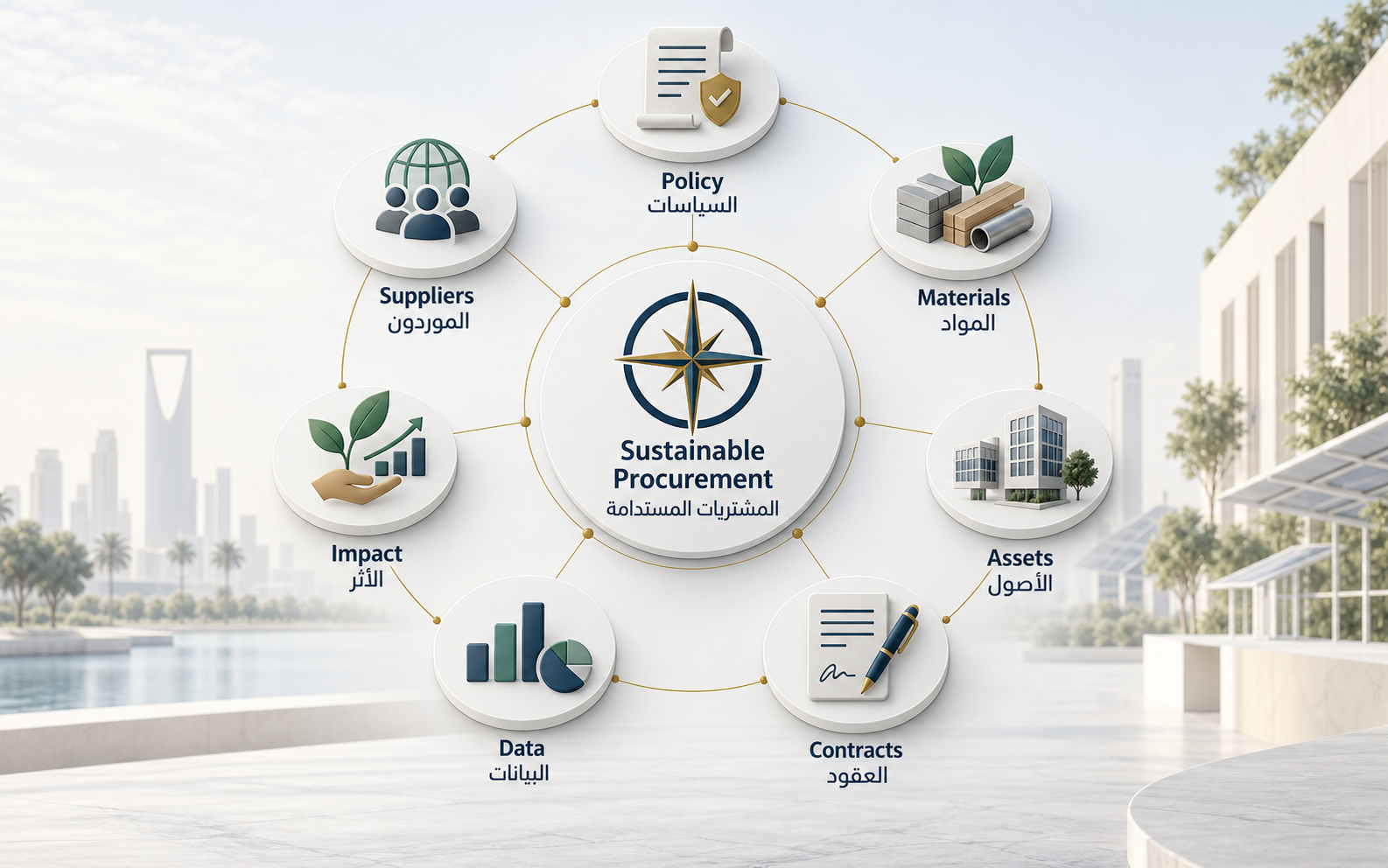
3. Seven Practical Dimensions
- Principles and policies
- Sustainable suppliers
- Materials and green inventory
- Projects and assets
- People and social impact
- Contracts and performance indicators
- Data, reports, and measurable impact
4. Green Procurement, Claims, and Labeling
Green procurement is useful only when claims can be verified. A product described as green, eco-friendly, recyclable, low-carbon, or sustainable should be supported by evidence such as certificates, technical sheets, test reports, manufacturer declarations, lifecycle data, or supplier policies.
Procurement should avoid accepting labels as marketing decoration. Claims should be checked against performance, quality, cost, service life, maintenance, availability, and disposal requirements.
5. Item Coding, Classification, and Green Inventory
Item coding and classification are often treated as administrative tasks, but they are powerful sustainability controls. Materials can be tagged by category, hazardous status, recyclable content, certification, shelf life, storage requirement, substitution option, local availability, and reuse potential.
When green attributes are built into the item master and category structure, future sourcing becomes easier to audit. Teams can identify excess inventory, duplicate items, expired stock, hazardous materials, and opportunities for reuse, repair, recovery, or recycling.
6. Sustainable Suppliers and Due Diligence
A sustainable supplier is not only the lowest bidder with a good profile. The evaluation should consider delivery reliability, technical capability, financial stability, HSE performance, labor practices, compliance history, governance, environmental practices, local content, reporting quality, and willingness to improve.
For high-risk categories, supplier due diligence should include human rights, forced labor, child labor, anti-bribery and corruption, code of conduct acceptance, corrective action mechanisms, and evidence that standards are applied beyond the proposal stage.
7. Projects, Assets, and Facilities
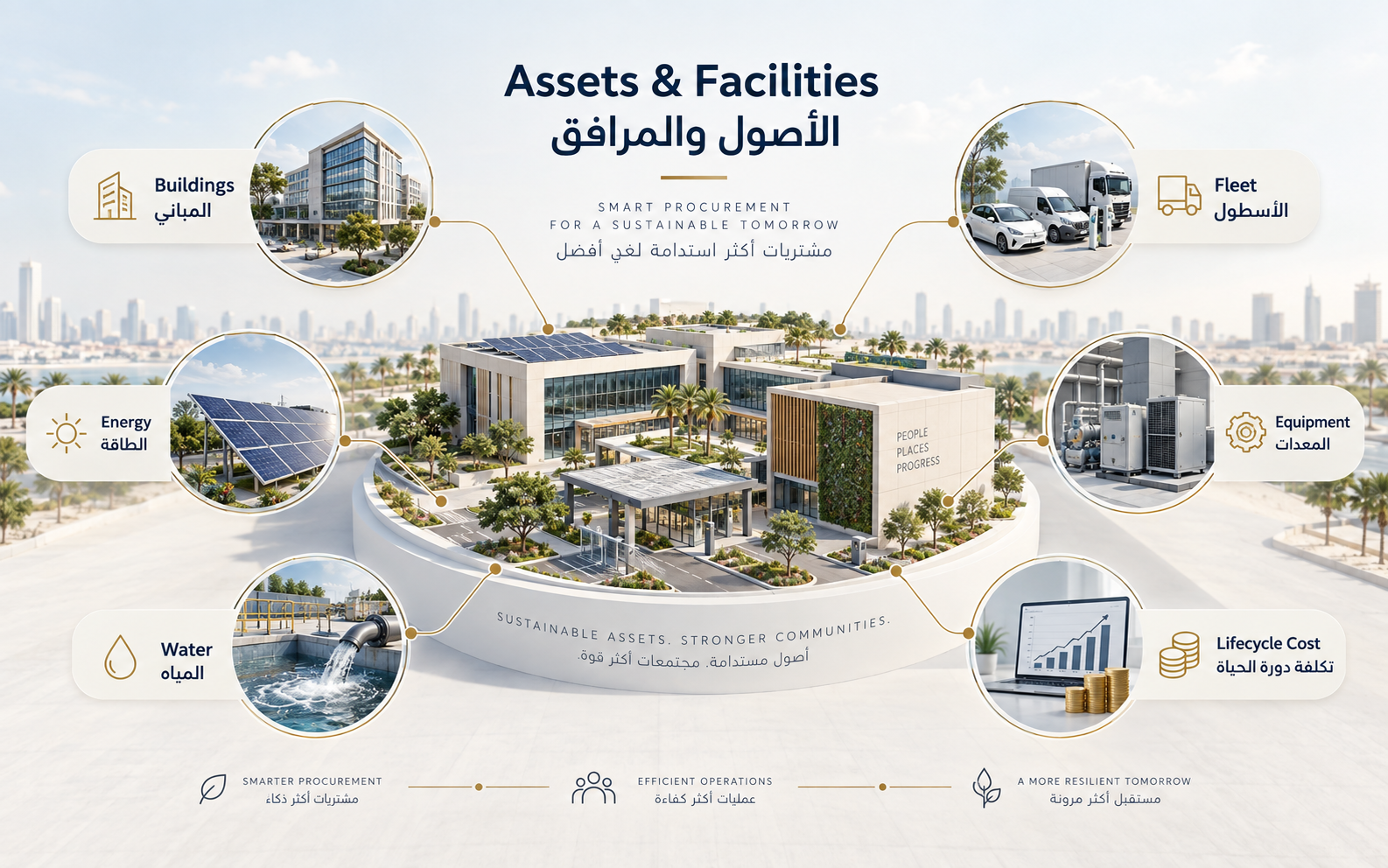
Sustainability can be shaped in design, construction, and asset planning. Buildings, facilities, fleets, equipment, renewable energy systems, water and energy efficiency upgrades, and operating materials all create procurement decisions with long-term consequences.
Lifecycle costing is essential here. The lowest purchase price may become expensive after installation, energy consumption, maintenance, downtime, spare parts, training, replacement, and disposal are considered.
8. Circular Procurement and Waste Reduction
Traditional procurement often follows a linear path: buy, use, dispose. Circular procurement asks how the organization can preserve value for longer through maintenance, repair, reuse, refurbishment, remanufacturing, recycling, and responsible disposal.
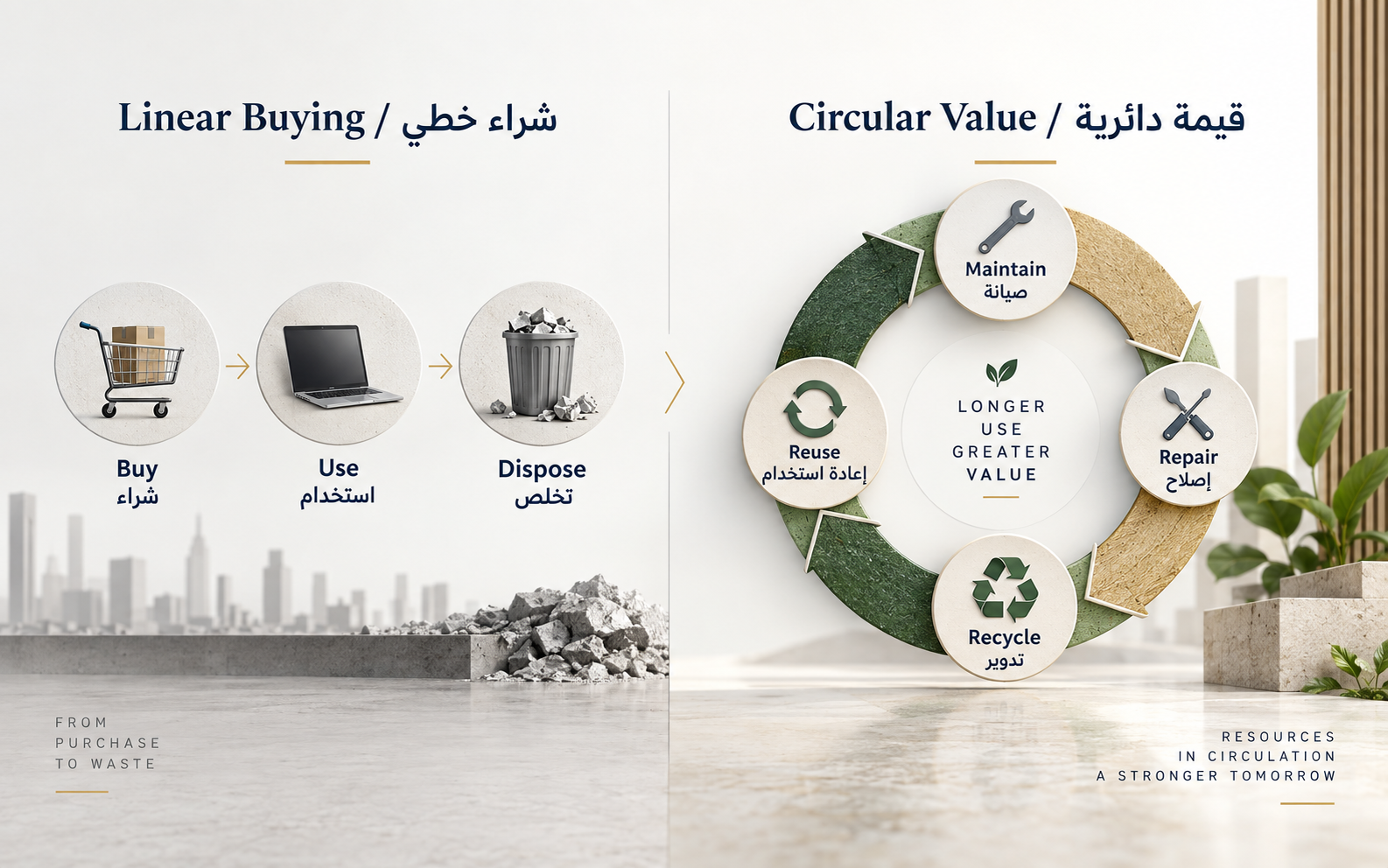
Storage is part of this logic. Poor shelf-life control, unclear item coding, unsuitable warehouse conditions, duplicated stock, damaged goods, excessive packaging, and weak handling instructions can turn purchased value into waste.
9. Contracts, KPIs, and ISO 20400
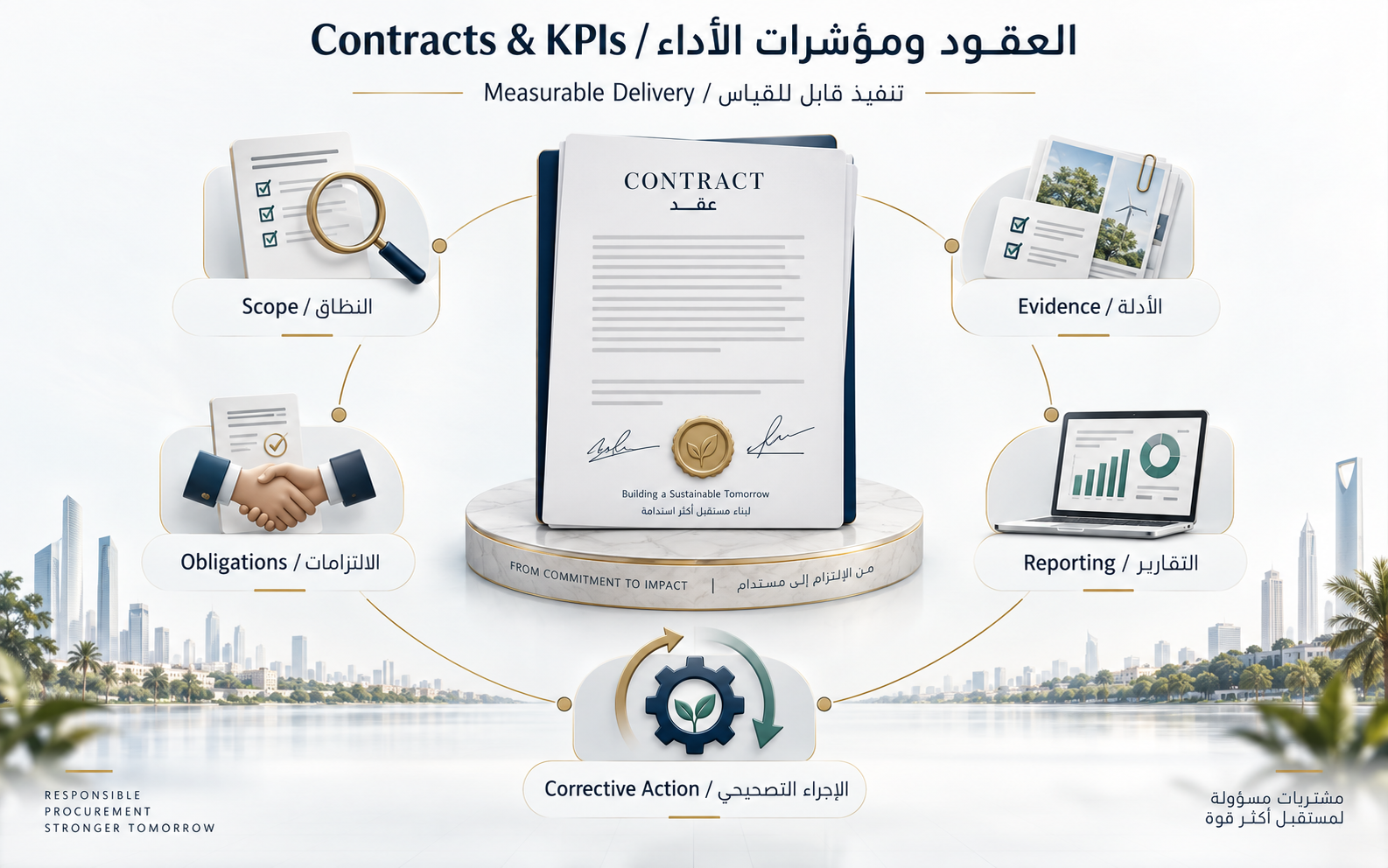
If sustainability does not appear in the scope, specifications, evaluation criteria, or contract, it is unlikely to appear in delivery. Tender documents should translate intentions into requirements, evidence requests, supplier responsibilities, reporting duties, and measurable KPIs.
ISO 20400:2017 is the international guidance standard for sustainable procurement. It supports integration of sustainability into procurement policy, strategy, supplier engagement, risk assessment, sourcing, contracting, and performance review.
Useful KPIs may include energy performance, waste reduction, packaging reduction, local content, supplier corrective actions, health and safety indicators, compliance reporting, greenhouse gas data where available, and improvement milestones.
10. Data, Reporting, and Decision Making
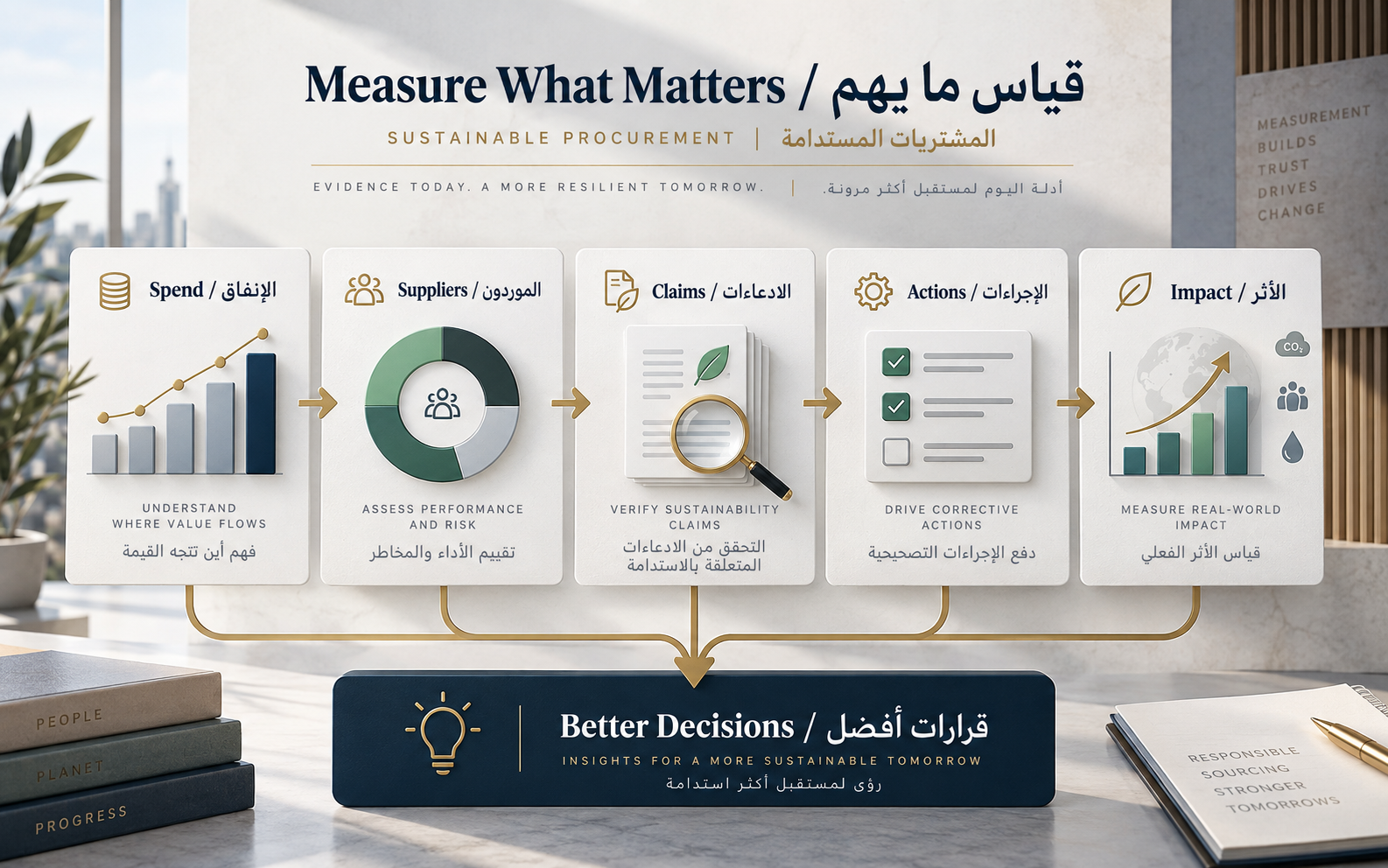
Sustainability cannot be managed only through intentions. Procurement needs reliable data: spend by category, supplier performance, certification status, country of origin, logistics choices, lifecycle cost, incident history, corrective actions, and measurable impact.
Data quality matters. Poor coding, missing fields, inconsistent supplier names, weak document retention, and unclear ownership can make sustainability reporting look impressive while remaining operationally weak.
11. Practical Implementation Roadmap
- Define the current position and priority categories
- Set measurable requirements and evidence standards
- Engage suppliers and request verifiable data
- Place obligations and KPIs into contracts
- Measure performance and review results
- Correct non-compliance and improve continuously
- Turn lessons learned into better procurement decisions
12. The UAE Perspective
In the UAE, sustainable procurement connects with governance, spending efficiency, supplier development, local content, ESG expectations, digital transformation, and future readiness. The goal is not to copy international models mechanically, but to build a practical system that fits the organization, sector, supplier base, and maturity level.
“Better procurement decisions today create stronger, more responsible organizations tomorrow.”
SANAD Consultancy Services (FZE) Support · Guide · Achieve